
How to Decarb Weed: 7 Essential Steps Every DC Medical Cannabis Patient Needs to Know
If you’ve ever tried to make edibles at home and ended up with something that tasted like lawn clippings but did absolutely nothing, you probably skipped the most important step. You forgot to decarb weed first. Had a patient come in last Tuesday — sweet older guy from Petworth — who’d been tossing raw flower straight into his slow cooker chili for months wondering why it wasn’t helping his joint pain. We had a good laugh about it. But honestly, he’s not alone. Most people don’t realize that raw cannabis won’t get you medicated. The cannabinoids need heat to activate, and that’s exactly what decarboxylation does. This guide breaks down the whole process in seven clear steps so you can start making effective medicine at home.
What Is Decarboxylation and Why Should Every DC Cannabis Patient Care?
Here’s the thing: the cannabis flower sitting in your jar right now doesn’t actually contain much THC. It contains THC-A, which is the acidic precursor. THC-A won’t bind to your CB1 receptors the way you need it to. It has its own potential benefits, sure, but if you’re looking for the pain relief, appetite stimulation, or sleep support that most DC medical patients are after, you need THC — the activated form.
Decarboxylation is just a fancy word for “applying heat to remove a carboxyl group from the cannabinoid molecule.” When you smoke or vape, decarb happens instantly from the flame or heating element. But when you’re making edibles or tinctures? You’ve got to do it yourself, deliberately, before you infuse anything.
This matters for cannabis for beginners DC patients especially. I see folks every week at Green Legacy who are brand new to their medical card and want to try edibles but feel overwhelmed. Don’t be. It’s way simpler than it sounds.
The Science in Plain English
THC-A + Heat → THC + CO₂. That’s it. The same thing happens with CBD-A converting to CBD. You’re just knocking off a molecule of carbon dioxide. The trick is applying enough heat to convert the cannabinoids without applying so much heat that you destroy them. Terpenes like myrcene and linalool start degrading at lower temperatures too, so precision matters if you want the full entourage effect working for you.
Step-by-Step: How to Decarb Weed at Home (Cannabis for Beginners DC Edition)
Alright, let’s get into the actual steps. Grab your flower — I’d recommend something with a lab-verified potency so you can dose accurately. You can check our COA library to see exactly what’s in the strains we carry.
Step 1: Choose Your Strain Wisely
Not all flower is created equal for edibles. High-THC strains like Ice Cream Cake or GMO Cookies will give you potent results. If you’re looking for something more balanced, a 1:1 THC:CBD strain works beautifully for pain without heavy sedation. Browse our menu and look at the cannabinoid profiles — they matter here more than anywhere.
Step 2: Break It Up (But Don’t Grind It to Dust)
Break your flower into pea-sized pieces by hand or with a rough chop. You do NOT want a fine grind — that leads to plant material passing through strainers later and making your butter taste like a compost bin. Chunky is good.
Step 3: Preheat Your Oven to 240°F
This is the sweet spot. Some guides say 220°F, some say 250°F. After years of hearing feedback from patients who cook at home, 240°F for 40 minutes consistently produces the best results. Use an oven thermometer (trust me on this one) because most home ovens are off by 10-25 degrees.
Step 4: Spread Evenly on a Lined Baking Sheet
Parchment paper. Single layer. No overlapping. This ensures even heat distribution so every piece decarbs at the same rate.
Step 5: Bake for 40 Minutes
Set a timer. At the 20-minute mark, gently shake the pan to redistribute. Your kitchen will smell — that’s the terpenes volatilizing. Open a window if you’ve got neighbors in your Columbia Heights apartment who might get curious.
Step 6: Cool Completely Before Handling
Let it cool on the baking sheet for at least 15-20 minutes. It should look toasted — golden brown, dry, and crumbly. If it’s dark brown or black, your oven ran too hot and you’ve lost potency.
Step 7: Store or Infuse Immediately
Decarbed flower starts losing potency over time through oxidation. Use it within a day or two, or store it in an airtight mason jar in a cool, dark place for up to a month. But ideally? Go straight into your infusion.
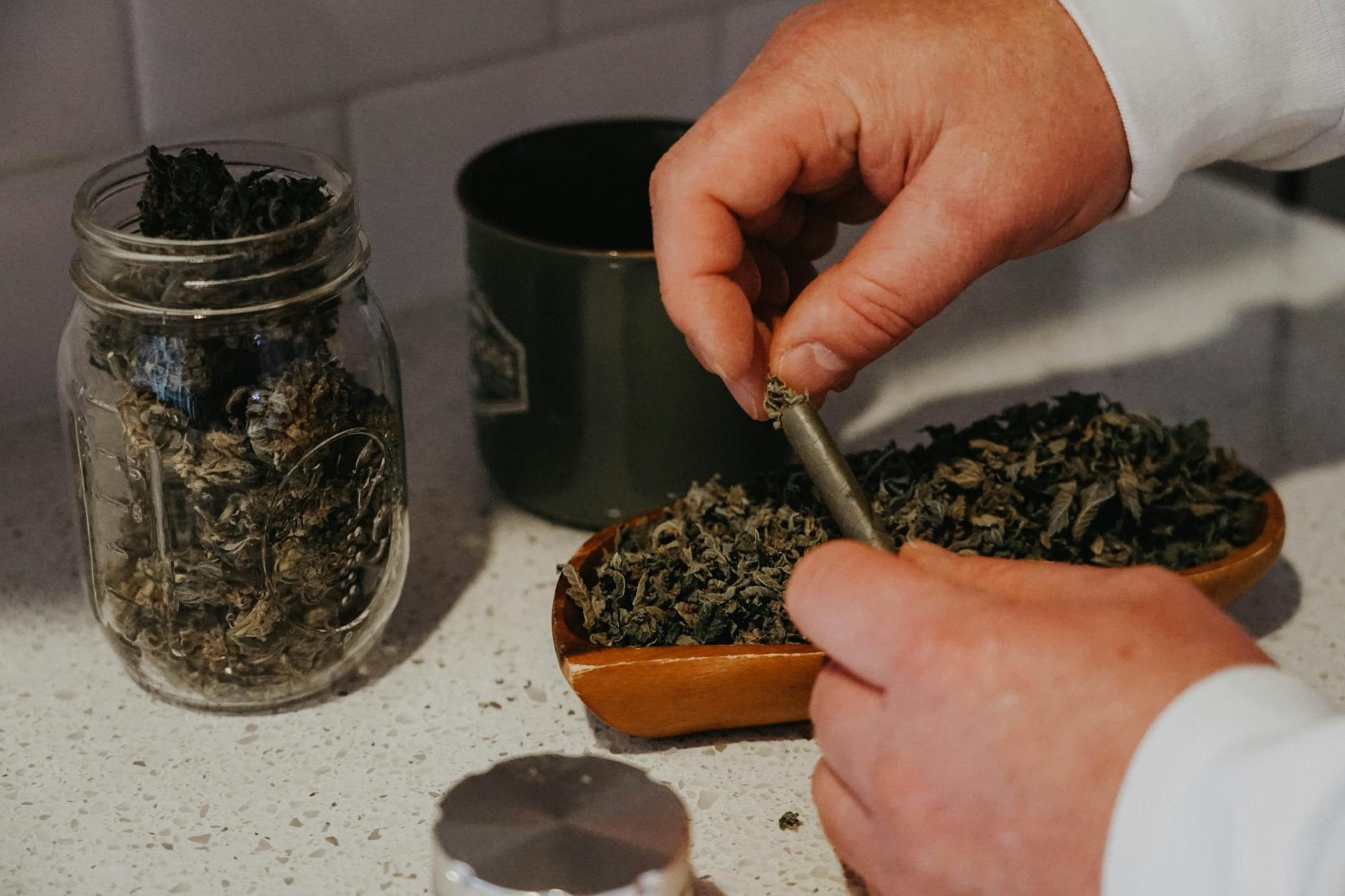
How to Make Cannabutter: The Foundation of Great Homemade Edibles
Now that you’ve got properly decarbed flower, let’s talk about how to make cannabutter — because butter is the backbone of almost every edible recipe worth making.
What You’ll Need
- 7-10 grams of decarbed flower (adjust based on desired potency)
- 1 cup (2 sticks) of unsalted butter
- 1 cup of water
- Cheesecloth or fine mesh strainer
- Medium saucepan or slow cooker
The Process
Melt the butter with the water on low heat. The water prevents scorching — this is non-negotiable. Add your decarbed flower. Maintain a temperature between 160-180°F and let it simmer for 2-3 hours, stirring occasionally. Never let it boil. When it’s done, strain through cheesecloth into a glass container, squeezing out every last drop of that liquid gold.
Refrigerate overnight. The butter will solidify on top of the water. Poke a hole, drain the water, and you’ve got cannabutter ready for cookies, brownies, toast, pasta — whatever you want.
One of our regulars swears by adding her cannabutter to morning coffee with a frother. Says it handles her fibromyalgia better than any pill she’s tried. Everyone’s different, but I love hearing those stories.
Dosing Your Cannabutter
This is where people get into trouble. If you used 7 grams of flower testing at 25% THC, you’ve got roughly 1,750mg of THC in your entire batch (accounting for some loss during decarb — realistically closer to 1,400mg). Split across 28 tablespoons of butter, that’s about 50mg per tablespoon. For most patients, especially if you’re learning how to make edibles for the first time, start with a quarter tablespoon in a recipe and see how you feel after two hours. You can always eat more. You can’t un-eat a brownie.
For verified potency numbers on the flower you’re starting with, our edible COAs and strain test results help you calculate accurate doses. Math matters here.
Getting Your DC Medical Card: Easier Than You Think
Honestly, this is the part where people overthink everything. Getting your DC cannabis patient card is shockingly simple. DC uses a self-certification process — no doctor’s appointment needed, no specific qualifying condition, no jumping through hoops.
Here’s What You Actually Need to Do
- Be 21 or older
- Go online to the DC Department of Health medical cannabis portal
- Self-certify that you have a condition you believe cannabis can help with
- Submit your application — it takes about two minutes (seriously, two minutes)
- It’s free
The biggest concern I hear, especially from patients who work in Shaw and the federal corridor? “Will my employer find out?” No. DC ABCA does not share patient registration data with employers or federal agencies. Your patient privacy is protected under DC law. Period. Your career is not at risk because you registered for a medical card.
Once you’re registered, you can shop at licensed dispensaries like Green Legacy, where everything is lab-tested and properly labeled. That matters a lot when you’re about to decarb weed and make medicine you’ll be ingesting.
Pro Tips From Behind the Counter at Green Legacy DC
After six years of helping patients figure this stuff out, here are the things I wish everyone knew before their first decarb attempt:
- Mason jar method: Put your broken-up flower in a mason jar, loosely screw on the lid, and bake at 240°F. It contains the smell dramatically and preserves terpenes better than an open sheet pan.
- Don’t decarb shake or trim for edibles unless you want a grassy, chlorophyll-heavy taste. Quality flower in, quality edibles out.
- Label everything. Date, strain, estimated mg per serving. Future you will thank present you.
- Coconut oil works just as well as butter and has a higher fat content for cannabinoid binding. Great option for patients who are dairy-free.
If you don’t feel like doing all this yourself (no judgment), we carry a solid range of professionally made edibles too. Check out our full menu or set up DC cannabis delivery if you’d rather stay on the couch.
Frequently Asked Questions About How to Decarb Weed
What temperature should I decarb weed at?
The ideal temperature to decarb weed is 240°F for 40 minutes. This activates THC-A into THC without burning off terpenes or degrading cannabinoids. Always use an oven thermometer since most home ovens have temperature variances of 10-25 degrees that can significantly affect your results.
Can I decarb weed in an air fryer or microwave?
Microwaves are a hard no — they heat unevenly and will destroy cannabinoids in some spots while leaving others raw. Air fryers can technically work but are difficult to control at precise low temperatures. A standard oven or a purpose-built decarboxylation device gives the most consistent and reliable results every time.
How long does cannabutter stay good after I make it?
Properly made cannabutter lasts about two weeks in the refrigerator and up to six months in the freezer. Store it in an airtight container away from light. Label it clearly with the date and estimated milligrams per tablespoon so you can dose accurately weeks later without guessing.
Do I need a medical card to buy cannabis for edibles in DC?
Yes. DC licensed dispensaries require a valid medical cannabis patient registration. The good news is DC’s self-certification process is free, takes about two minutes online, and is open to anyone 21 or older. ABCA does not share your patient information with employers or federal agencies.
How do I know if my decarb worked properly?
Properly decarbed cannabis looks golden-brown, feels dry and crumbly, and smells toasted rather than fresh. If it’s still green and moist, it needs more time. If it’s dark brown or black, you overcooked it and lost potency. Starting with lab-tested flower helps you calculate expected potency accurately.
Ready to Start Cooking? We’ve Got Your Flower.
Whether you’re a first-timer or you’ve been making edibles since before it was legal, the quality of your starting material determines everything. At Green Legacy DC, every strain on our shelf comes with full lab testing you can verify yourself. Stop by our dispensary, check the menu online, or use our delivery service to get what you need brought right to your door. Got questions about dosing, strains for cooking, or anything else? That’s literally what we’re here for. Come talk to us — we love this stuff.